FRAGMENT OF EVOLUTION
KIKOH MATSUURA x Shimadzu Corporation
2022.jan.29 - feb.13 Kyoto City KYOCERA Museum of Art – Higashiyama Cube
KIKOH MATSUURA x Shimadzu Corporation
2022.jan.29 - feb.13 Kyoto City KYOCERA Museum of Art – Higashiyama Cube
KYOTO STEAM 2022 Works Created for an International Art Competition
PHOTO:MUGYUDA HYOGO
PHOTO:MUGYUDA HYOGO
There are many things that the humans of ancient times wrote on wall paintings and stone tablets whose meaning remains a mystery. But there is no doubt that they were written as a result of thought.
To live and sustain themselves and their families, the humans of ancient times must have faced far greater hardships than we do today. They were surely thinking very deeply about the problems they faced on a daily basis. People have written down what they needed to do to survive, to live another day, and for the future. This tells us about the trajectory by which we have evolved into our modern selves. And it also tells us that we are still in the process of evolving, and carving out a trajectory for ourselves.
To live and sustain themselves and their families, the humans of ancient times must have faced far greater hardships than we do today. They were surely thinking very deeply about the problems they faced on a daily basis. People have written down what they needed to do to survive, to live another day, and for the future. This tells us about the trajectory by which we have evolved into our modern selves. And it also tells us that we are still in the process of evolving, and carving out a trajectory for ourselves.
(looped, running time 7 min 56 sec)
fNIRS (functional near-infrared spectroscopy)
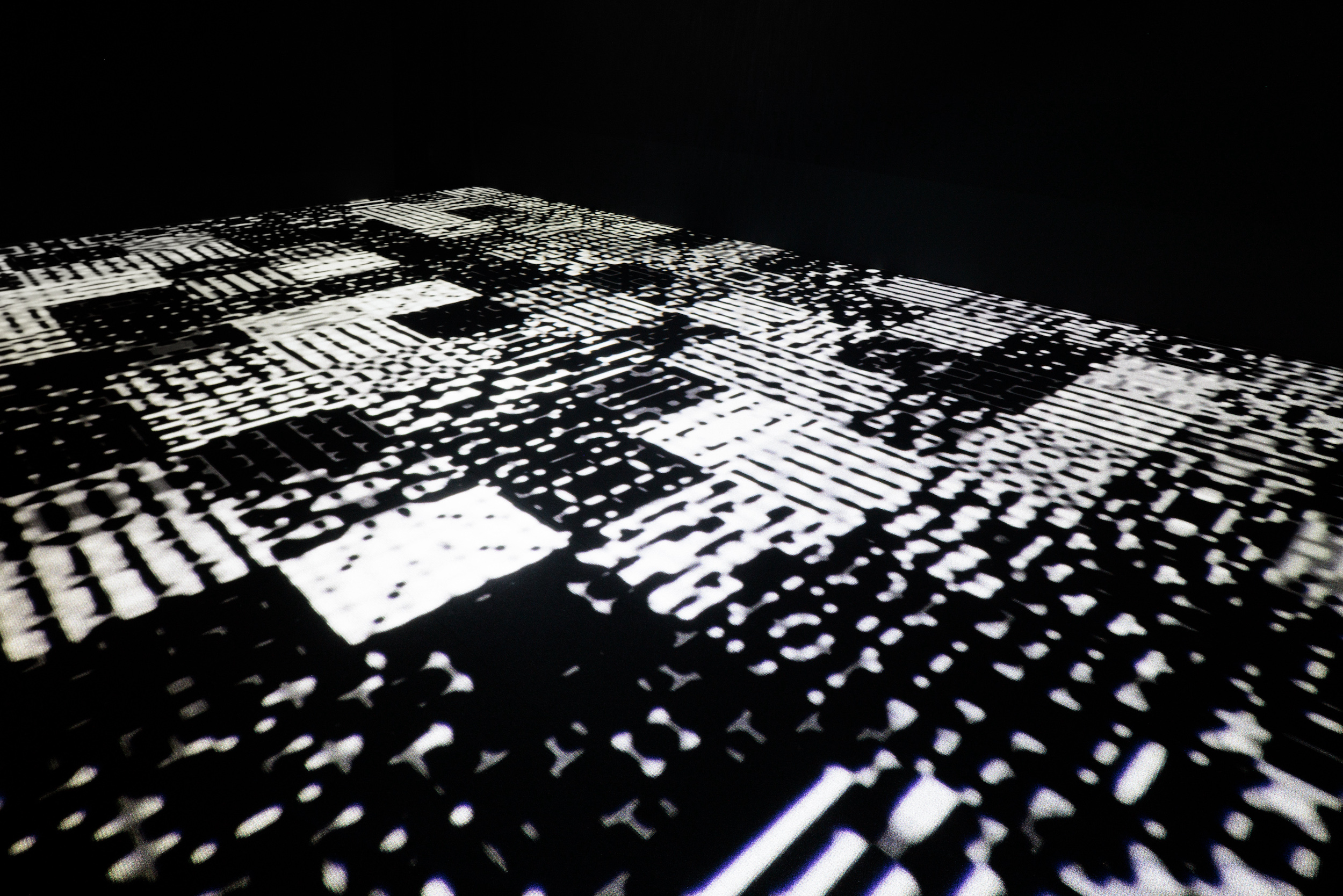
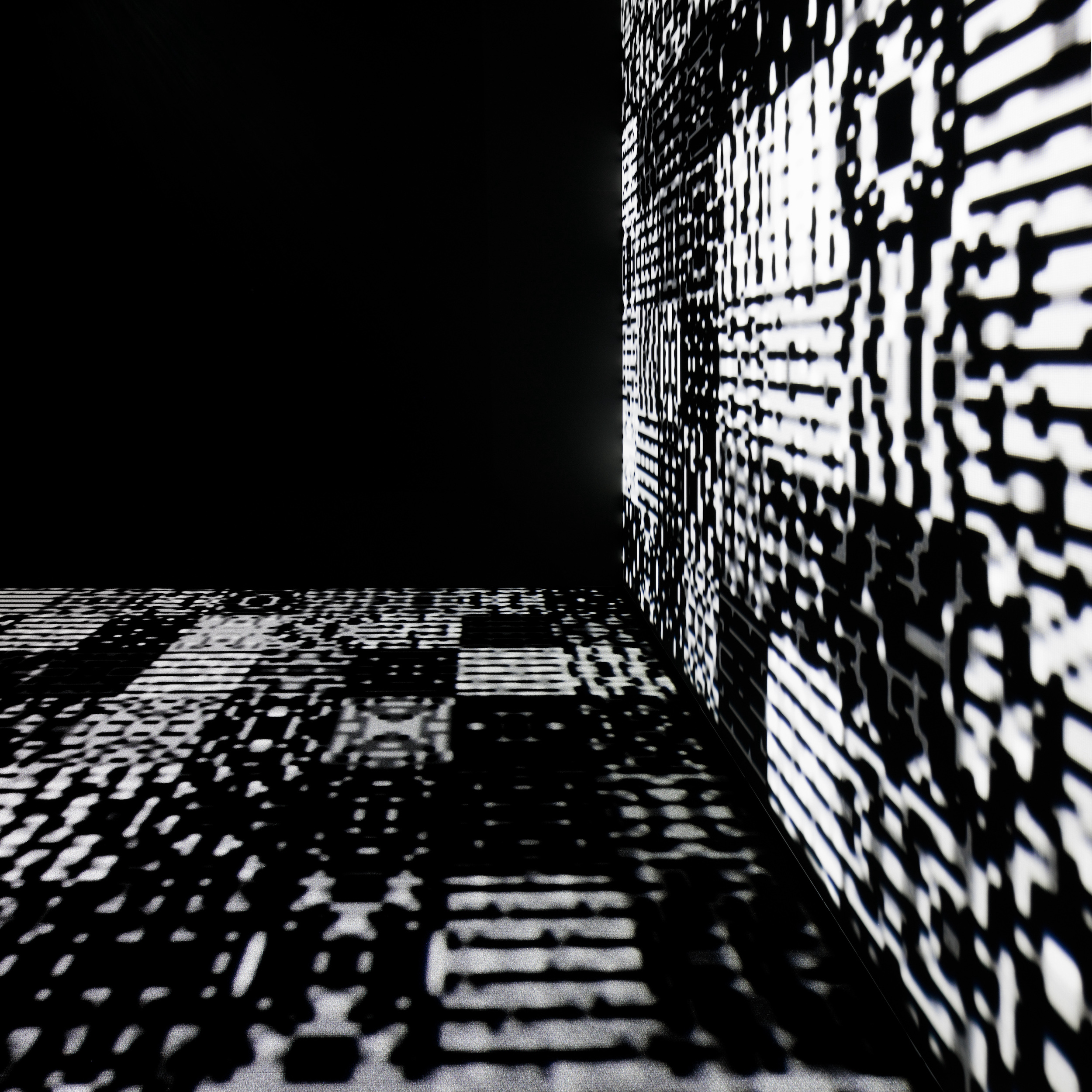
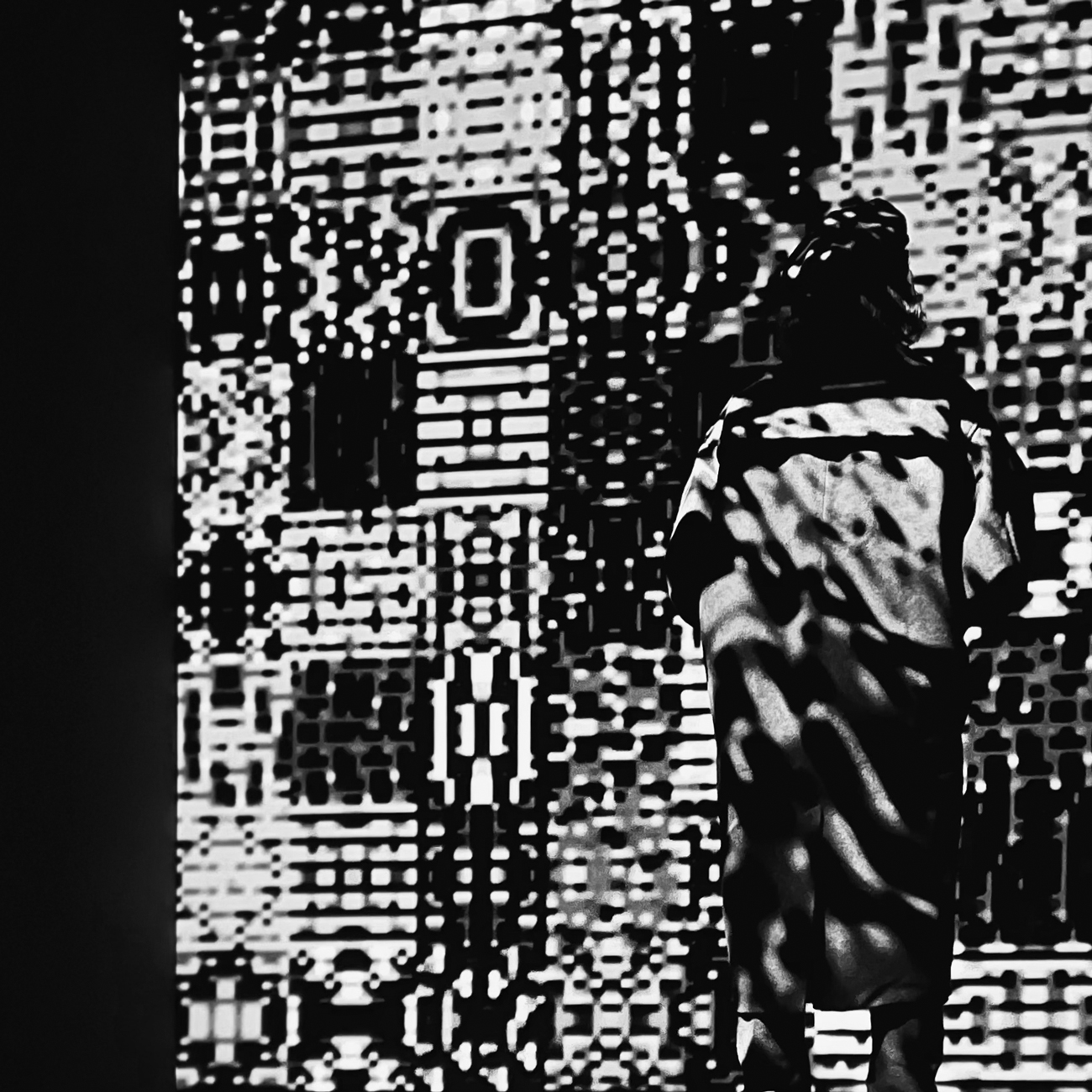
Kikoh Matsuura has been pursuing interests in harnessing cutting-edge science and technology to render visible and audible latent presences that cannot be grasped through human cognition, such as photographing microplastics collected on beaches with a scanning electron microscope, or analyzing minerals and human-made objects – also with a scanning electron microscope – and converting visual information obtained from them into sound art. His work can be said to present a new picture of the world through the power of science and technology. Now, Matsuura has collaborated with Shimadzu Corporation, which manufactures and markets analytical and measuring instruments, medical systems, aircraft equipment, and industrial machinery. Matsuura monitored the brain activity of 44 randomly selected subjects using fNIRS (functional near-infrared spectroscopy) technology from Shimadzu Corporation that displays human neural activity in visible form, and created a video by editing the obtained data using a unique process. Another part of the work consists of sound art that reverberates in the venue, made by superimposing many layers of his own voice. “What problems do you think we need to solve in order to continue living on this planet? And what do you think we should do to solve those problems?” Matsuura asked the subjects questions of this nature while collecting the data, and for this reason the work is titled Fragment of Evolution. It presents in visible form the brain activity that occurs when diverse individuals, of different ages, genders, and backgrounds, think about the future. Even the latest science and technology cannot measure all the minutiae of the brain’s activity. All it can monitor is the fact that neural activity we call “thinking” is taking place in the brain, and that this neural activity changes over time. Naturally, Matsuura is fully aware of this. In this work, data obtained using fNIRS has been transformed into pictograms reminiscent of ancient script unreadable to us today, which continuously flicker before our eyes. Thoughts about our future are measured by Shimadzu Corporation’s technology, which probes the unknown frontiers of brain activity, and rendered in pictorial form by Kikoh Matsuura. What do we feel, and what sort of future do we imagine, when we encounter these evolving fragments of thought filling the space and remaining in constant motion?
fNIRS (functional near-infrared spectroscopy)
Kikoh Matsuura has been pursuing interests in harnessing cutting-edge science and technology to render visible and audible latent presences that cannot be grasped through human cognition, such as photographing microplastics collected on beaches with a scanning electron microscope, or analyzing minerals and human-made objects – also with a scanning electron microscope – and converting visual information obtained from them into sound art. His work can be said to present a new picture of the world through the power of science and technology. Now, Matsuura has collaborated with Shimadzu Corporation, which manufactures and markets analytical and measuring instruments, medical systems, aircraft equipment, and industrial machinery. Matsuura monitored the brain activity of 44 randomly selected subjects using fNIRS (functional near-infrared spectroscopy) technology from Shimadzu Corporation that displays human neural activity in visible form, and created a video by editing the obtained data using a unique process. Another part of the work consists of sound art that reverberates in the venue, made by superimposing many layers of his own voice. “What problems do you think we need to solve in order to continue living on this planet? And what do you think we should do to solve those problems?” Matsuura asked the subjects questions of this nature while collecting the data, and for this reason the work is titled Fragment of Evolution. It presents in visible form the brain activity that occurs when diverse individuals, of different ages, genders, and backgrounds, think about the future. Even the latest science and technology cannot measure all the minutiae of the brain’s activity. All it can monitor is the fact that neural activity we call “thinking” is taking place in the brain, and that this neural activity changes over time. Naturally, Matsuura is fully aware of this. In this work, data obtained using fNIRS has been transformed into pictograms reminiscent of ancient script unreadable to us today, which continuously flicker before our eyes. Thoughts about our future are measured by Shimadzu Corporation’s technology, which probes the unknown frontiers of brain activity, and rendered in pictorial form by Kikoh Matsuura. What do we feel, and what sort of future do we imagine, when we encounter these evolving fragments of thought filling the space and remaining in constant motion?
Living things have been evolving since birth. Even now, they continue to evolve without pause.
The difference between humans and other living things is that, in the case of the former, the development of civilization through thought can also be said to be a form of evolution. It has its own will.
Since the beginning of civilization, mankind has progressed through thought, while facing a variety of problems down throughout the ages including war, slavery, infectious disease, and environmental destruction. Each one of us thinks in order to overcome problems, and these thoughts become fragments that lead to the evolution of mankind.
Since the beginning of civilization, mankind has progressed through thought, while facing a variety of problems down throughout the ages including war, slavery, infectious disease, and environmental destruction. Each one of us thinks in order to overcome problems, and these thoughts become fragments that lead to the evolution of mankind.